Brown Fat Gets Real: What Cold Exposure Studies Show in Adults
Three 2009 New England Journal studies confirm adults carry cold-activated brown fat. What the evidence says about browning, energy use, and real fat loss.

A 2011 randomized trial found one year of brisk walking increased older adults’ hippocampal volume by about 2 percent while stretching controls lost volume.
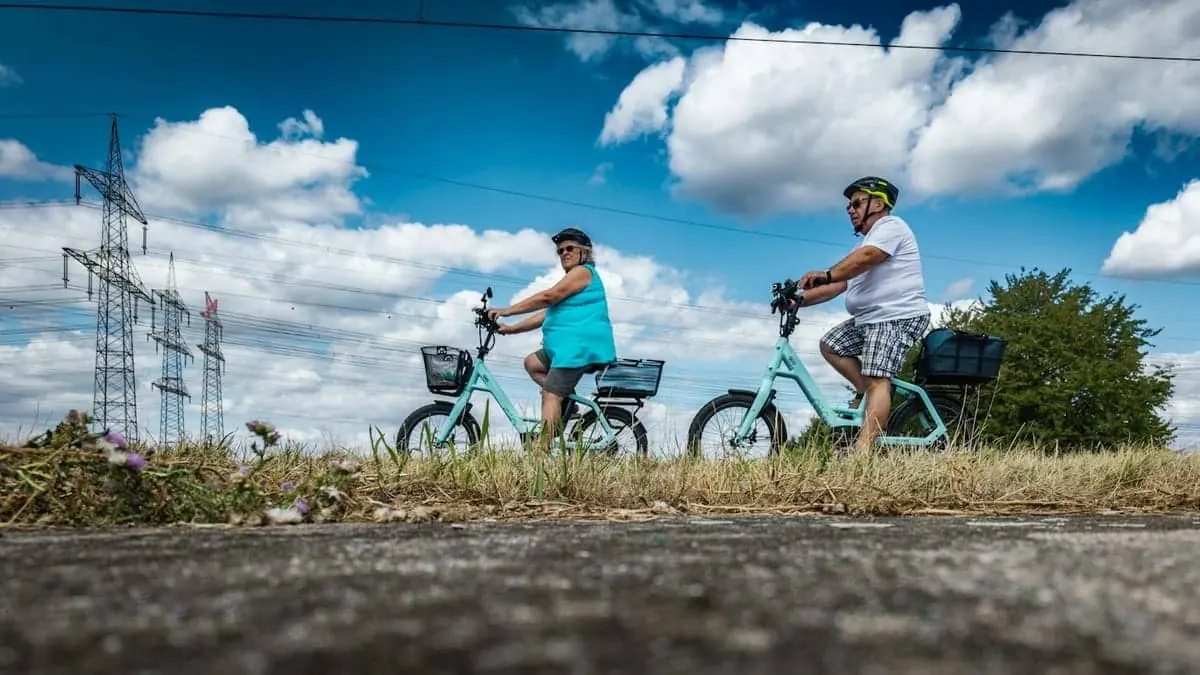
A larger structure on a brain scan is an interesting result, but it is not the same outcome as preventing dementia. That distinction is essential to reading the 2011 walking trial by Erickson and colleagues. In 120 older adults, a year of aerobic training increased anterior hippocampal volume by about 2 percent. This article follows the chain from the exercise program to the MRI finding and the memory tests, keeping those endpoints separate rather than turning a scan result into a promise about future disease.
Kirk Erickson of the University of Pittsburgh and Arthur Kramer of the University of Illinois recruited 120 sedentary older adults without dementia and randomized them to one of two programs. The aerobic group walked around a track for 40 minutes a day, three days a week. The control group did stretching and toning exercises on the same schedule, a comparison designed to isolate the aerobic component while matching attention and social contact.
Over one year, participants underwent magnetic resonance imaging, spatial memory testing, and blood sampling at baseline, at six months, and at the end. The work was supported largely by the National Institute on Aging.
The aerobic group's anterior hippocampus, the region most affected by aging, grew by 2.12 percent on the left and 1.97 percent on the right. The stretching group's hippocampus declined by 1.40 and 1.43 percent in the same regions, continuing the expected age-related trajectory.
The authors calculated that the roughly 2 percent gain effectively reversed one to two years of typical age-related volume loss. Crucially, the caudate nucleus and thalamus, two nearby brain structures not expected to respond to aerobic exercise, were unchanged in both groups, suggesting the effect was specific rather than a general scanning artifact.
The trial also measured brain-derived neurotrophic factor, or BDNF, a protein that supports the survival and growth of neurons and mediates neurogenesis in the dentate gyrus of animal models. Increases in serum BDNF were associated with increases in hippocampal volume, providing a plausible molecular bridge between walking programs and brain tissue.
Both groups improved on spatial memory tests over the year, but only in the walking group did the memory gains correlate significantly with the volume increases, hinting that the structural change carried functional meaning.
The control group's design has since become a model for exercise trials in neuroscience. Stretching and toning controlled for the attention, routine, and social contact that any supervised program provides, which matters because those ingredients have real effects of their own and could otherwise be mistaken for the benefit of aerobic work. The contrast was also fair on effort: both groups attended the same number of supervised sessions, so the comparison isolated the physiology of sustained walking rather than the experience of joining a study.
Earlier studies had shown that fitter people have larger hippocampi, but those cross-sectional comparisons could not separate cause from constitution. A randomized trial answered that objection. As Erickson put it when the results were announced, the atrophy of the hippocampus in later life had been considered almost inevitable, and the trial showed that the brain at that stage remains modifiable.
The dose was modest by design: moderate walking, not interval sprints, in adults whose fitness was low enough at baseline that the intervention had room to work.
Animal work anticipated the result and supplies its mechanistic frame. Voluntary running increases the birth of new neurons in the dentate gyrus of rodents and raises the growth factors that support them, effects mapped decades before imaging could test them in people. The PNAS trial translated that literature to humans at a dose older adults can sustain, and the hippocampal region that grew, the anterior segment, is the same one where age-related loss and early Alzheimer's-related changes concentrate. Whether the response extends to people already carrying significant pathology is the open question the field is still testing.
A one-year study in 120 adults cannot establish whether exercise prevents dementia, and neither group developed measurable cognitive decline that could test that outcome. The memory benefits were modest, hippocampal volume is a proxy endpoint, and sedentary volunteers willing to commit to a year of monitored exercise may not represent the broader population. The trial also ran before widespread amyloid imaging, so participants' underlying brain pathology was unknown, which limits how far the result maps onto Alzheimer's disease specifically.
Later research has built on the finding, with larger trials examining aerobic training in people at elevated genetic risk for Alzheimer's disease, but replication at the level of clinical outcomes remains a work in progress.
The walking group built toward 40-minute sessions three days a week. That totals 120 minutes weekly, below the WHO lower target of 150 minutes of moderate aerobic activity. A research protocol is a tested exposure, not automatically a complete public-health prescription. Its result concerns a year of supervised participation in older adults; it does not establish that any rearrangement of those minutes produces the same MRI result.
Practical adaptations follow. Walks can be split across the day, done on a track, a treadmill or a sidewalk, and the aerobic marker to watch is breathing — deep but steady, still able to carry a sentence. Consistency across the year, not any single week, is what the trial's design rewards, and anchoring the walks to fixed calendar slots is how the study kept its participants showing up. None of this is exotic, and that is the point: the intervention's ordinariness is exactly what makes the result broadly usable.
First ask what changed: a brain volume, performance on a particular task, or the number of people diagnosed with disease. Next ask who participated; a result in sedentary older volunteers does not establish an equal response in a younger runner. Finally ask whether the comparison group received similar attention and contact. The stretching group helps address that last question here. Our reading is that the trial is useful evidence of structural responsiveness, while leaving a much larger clinical question open. A personal walking goal can be worthwhile without claiming that a given schedule will reproduce a specific percentage on an MRI.
The evidence supports moderate aerobic exercise as a way to preserve, and possibly rebuild, memory-related brain structure in later life. It does not support exercise as a stand-alone dementia treatment, and anyone with balance problems, heart disease, or joint limitations should design a walking program with a clinician.
The trial's most durable message is about plasticity: a brain structure long treated as fixed responded to an intervention as ordinary as three brisk walks a week.
Three 2009 New England Journal studies confirm adults carry cold-activated brown fat. What the evidence says about browning, energy use, and real fat loss.
Read the exercise evidence for depression without confusing pooled effects with a personal prescription or a reason to stop medication.

Two landmark analyses covering more than 870,000 treadmill tests found low cardiorespiratory fitness predicted death more strongly than smoking or diabetes.