Brown Fat Gets Real: What Cold Exposure Studies Show in Adults
Three 2009 New England Journal studies confirm adults carry cold-activated brown fat. What the evidence says about browning, energy use, and real fat loss.

A 2019 study of 19,806 UK adults found that at least 120 minutes a week in nature was linked to better self-reported health and wellbeing.
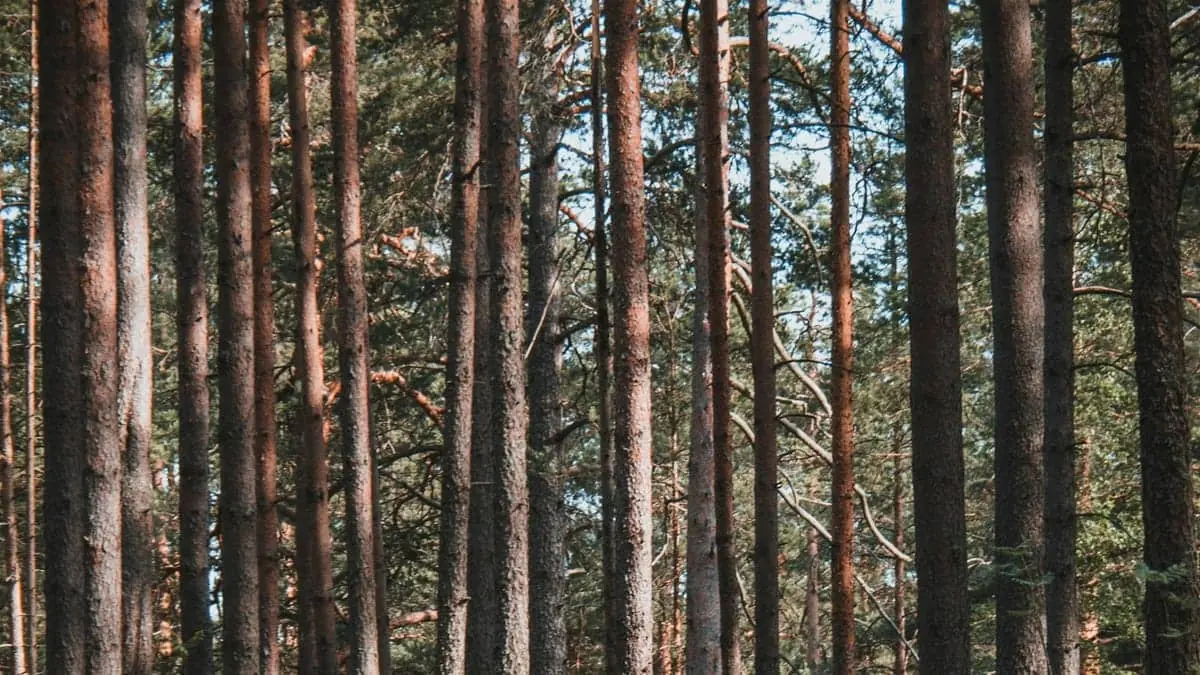
Two hours is an attractive target because it fits a calendar. In White and colleagues' study, however, it emerged from categories of reported nature contact in a cross-sectional survey, not an experiment that assigned an effective dose. People reporting at least 120 minutes were more likely to report good health and wellbeing. This article explains that association and its boundary, then considers how a practical outdoor opportunity can be chosen without claiming the survey established a treatment or a minimum below which a visit is worthless.
The researchers drew on the Monitor of Engagement with the Natural Environment Survey, a government-run survey conducted from 2014 to 2016 and weighted to be representative of the English population. Participants reported how much recreational time they had spent in natural settings during the previous seven days, including parks, fields, beaches, and woodlands, though private gardens were excluded.
The team then grouped weekly contact into 60-minute blocks and used statistical models to control for the amount of greenspace around each person's home, along with neighborhood deprivation and individual factors. That matters, because greener neighborhoods tend to attract healthier residents, and the analysis tried to separate the time spent in nature from where people happen to live.
The association became statistically clear in the categories at or above 120 minutes compared with no reported contact. Failure to detect a consistent association below that category does not prove a shorter visit has no effect. The categories are analytical groupings, not a demonstrated biological cutoff.
The association peaked between 200 and 300 minutes a week and then flattened, with no additional gain from spending longer. Just as important was how the time accumulated: one long weekend hike counted exactly the same as several short weekday walks.
The threshold held across nearly every group the researchers examined, including men and women, older adults, people in wealthy and deprived neighborhoods, and people with long-term illnesses and disabilities. That last point is notable, because it suggests the pattern is not simply that healthy people find it easier to get outside.
Most visits recorded in the survey happened close to home, meaning ordinary urban parks contributed to the effect. Exotic landscapes were not required.
The consistency of the threshold across groups is what separates this study from earlier greenspace research. Previous studies often reported that greener neighborhoods had healthier residents, a pattern vulnerable to the objection that wealth, housing, and jobs explain it. By measuring time in nature directly, in a survey large enough to compare deprived and affluent respondents, the Exeter team shifted the question from where people live to what people do, and the same weekly dose predicted better health and wellbeing in both.
The dose framing also gives clinicians and urban planners something concrete to recommend. A lunchtime walk five days a week crosses the threshold on its own, and so does a single longer weekend outing, since the benefit tracked total weekly time rather than how it was split. That flexibility is unusual among health behaviors, most of which arrive with equipment costs, skill requirements, or dose ceilings. It helps explain why the 120-minute figure traveled quickly beyond the journal, into news coverage, park advocacy, and the kind of simple advice general practitioners reach for when a patient needs an achievable first step.
The study's arithmetic is friendlier than the headline suggests. Two hours spread across seven days is about seventeen minutes daily; two working lunches plus one weekend walk clears it as well. Most visits recorded in the survey were close to home, so the nearest park, canal path or tree-lined cemetery qualifies — the researchers excluded private gardens from the count precisely to measure deliberate time in shared green space, but everything publicly accessible counted. Habit stacking does most of the work in practice: anchoring the minutes to existing routines, a dog walk, a phone call taken on foot, a bus stop two blocks early, converts the target from an errand into a byproduct.
Seasonality deserves a note. The survey ran across English weather, and the threshold held across the year, which suggests the benefit does not depend on postcard conditions. Waterproof layers and shorter, more frequent visits are the adjustments the dose implies — the data reward showing up, not spectacular outings.
Researchers point to several overlapping mechanisms. Natural settings lower stress physiology, with studies linking time in green space to reduced blood pressure and stress hormones. Attention restoration theory holds that nature engages the mind gently enough to let the brain's directed-attention system recover from urban demands. Nature time also bundles in incidental physical activity, social contact, and, near water, the added benefits some studies attribute to blue spaces.
None of these pathways has been isolated in this dataset, which is a genuine limitation of the design.
The study was observational and cross-sectional: it captured a single week of exposure and self-reported outcomes at one moment in time. It can show a strong association but cannot prove that nature time causes better health. Healthier people may simply be more able to visit parks, and self-reported health reflects perception as well as physiology.
The authors were explicit about this, calling for prospective longitudinal and intervention studies before any formal nature-dose guideline could be modeled on physical activity targets.
For an illustrative plan, identify a place that is accessible, affordable and suitable for current mobility and weather. Decide whether one visit or several shorter opportunities fit actual obligations. The survey did not find a dependence on one particular way of accumulating the total, but it also did not test this individual's route. A short available visit should not be rejected merely because it will not complete two hours. Track whether the plan is usable and enjoyable rather than using a population association to demand a particular improvement in mood or health.
Even with those caveats, the study offered the first concrete, population-level answer to a question doctors and urban planners ask constantly: how much nature is enough? Two hours a week, split however life allows, in the nearest park or riverbank, is a specific and achievable target in a way that vague exhortations to get outside are not.
Anyone with a chronic condition that limits mobility should discuss safe outdoor activity with a clinician. For everyone else, the evidence points to a modest weekly habit whose benefits, if real, accrue slowly and require no equipment beyond a pair of shoes.
Three 2009 New England Journal studies confirm adults carry cold-activated brown fat. What the evidence says about browning, energy use, and real fat loss.
Read the exercise evidence for depression without confusing pooled effects with a personal prescription or a reason to stop medication.

Two landmark analyses covering more than 870,000 treadmill tests found low cardiorespiratory fitness predicted death more strongly than smoking or diabetes.