Sleep Regularity May Matter More Than Sleep Duration
A UK Biobank study of 60,977 adults found sleep regularity predicted all-cause mortality more strongly than sleep duration. What the 2024 research shows.
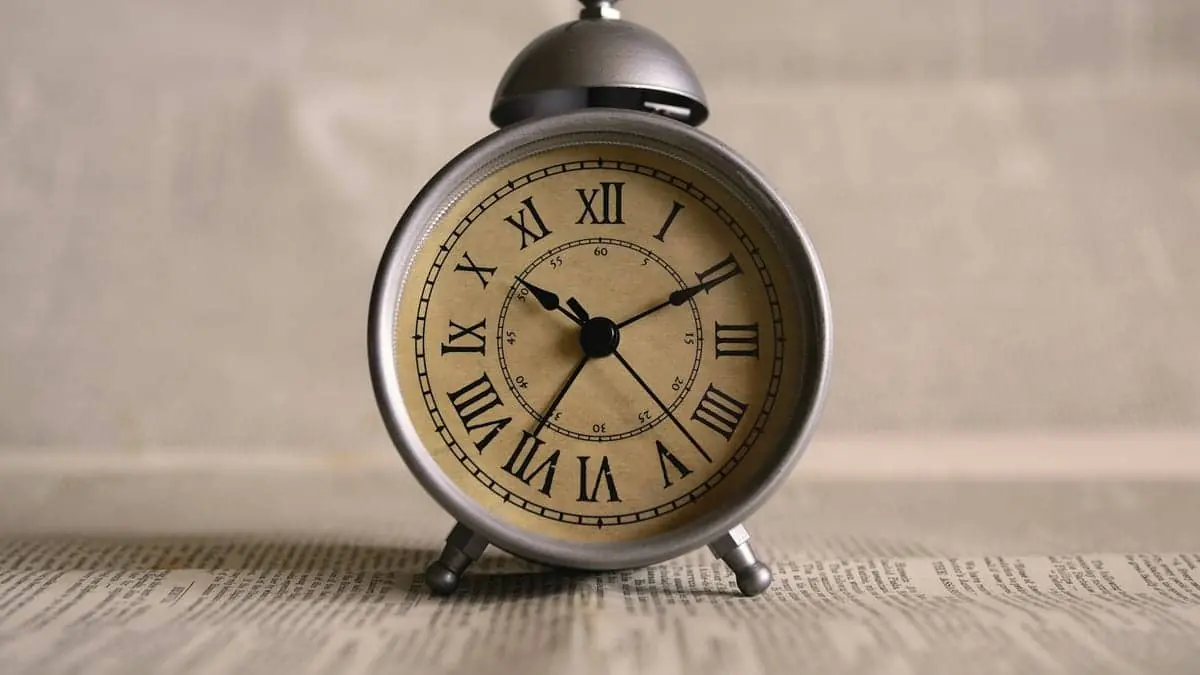
A randomized trial gave 12 adults 400 mg of caffeine at 0, 3 and 6 hours before bed. Even 6 hours out, objective sleep fell by more than an hour.

A coffee can feel uneventful while still overlapping with the night ahead. Drake and colleagues tested that mismatch by giving twelve adults a fixed 400-milligram caffeine dose at different times before bed and comparing both diaries and objective monitoring. The experiment makes timing worth considering, but the dose and sample matter. It is not a direct test of every afternoon drink, and six hours is the interval studied rather than a boundary after which caffeine is guaranteed to have no effect.
An ordinary caffeine log needs at least two columns: approximate milligrams and the time consumed. A third column for product and serving size helps explain why two coffees can be different exposures. Keep bedtime and wake time in the same record. Moving the last drink earlier while keeping its size similar is a clearer personal observation than changing several habits together, although it still cannot prove causation. Judge any change across several nights rather than interpreting one poor night as confirmation of the trial. Persistent insomnia needs appropriate care; a precise caffeine spreadsheet is not a treatment for every sleep problem.
The experiment, published in 2013 in the Journal of Clinical Sleep Medicine, was led by Christopher Drake and colleagues at the Henry Ford Hospital Sleep Disorders and Research Center. Twelve healthy adults who were normal, habitual caffeine users completed a randomized, double-blind, placebo-controlled crossover trial. Each person cycled through four conditions: 400 milligrams of caffeine, roughly two to three cups of coffee, taken at bedtime, three hours before bed, or six hours before bed, plus a placebo condition.
Participants took pills rather than drinking coffee, which kept the dose precise, and they slept at home with sleep measured both by a diary and by a portable objective monitor. The crossover design meant every person served as their own control, strengthening the comparison between conditions.
All three caffeine conditions significantly disrupted sleep. At bedtime and three hours out, the effects were what you would expect: longer time to fall asleep and more time awake during the night. The surprise came at six hours. Even then, objectively measured total sleep time was reduced by more than one hour, and the monitor registered suppressed deep sleep and more nighttime disturbance.
The most striking detail was subjective. When participants filled out their sleep diaries after the six-hour condition, they reported sleeping fine. Their subjective ratings showed no significant disruption. The objective record told a different story. As the authors put it in follow-up commentary, people tend to be less able to detect the disruptive effects of caffeine taken in the afternoon, which is precisely why the afternoon habit persists.
Caffeine works by blocking adenosine, the brain chemical that accumulates during waking hours and builds the pressure to sleep. The drug has a half-life commonly estimated at around five hours, though it varies widely between individuals with genetics, smoking status, pregnancy and liver function all playing roles. If you drink coffee at 4 p.m., a meaningful fraction of that dose can still be circulating when you turn off the light.
The six-hour figure comes from one small study, and it is a floor rather than a law. A 400 milligram dose is substantial, roughly the size of a large coffee shop order, and smaller doses disrupt less. Later reviews have suggested that for many people, an even longer buffer closer to eight or more hours is more prudent. Individual metabolism varies enough that no single cutoff fits everyone.
The 400 milligram dose in the study sounds abstract until you translate it into drinks. A typical brewed cup of coffee holds somewhere between 80 and 120 milligrams; a large coffee shop order can carry 300 or more. Espresso drinks concentrate the dose, tea generally carries half the load of coffee, and cola and energy drinks sit somewhere in between. The Food and Drug Administration considers up to 400 milligrams a day a reasonable limit for most healthy adults, which is the same total the study used in a single dose.
That framing matters because the experimenters delivered a full day's worth of caffeine at once, in pill form, at precisely controlled intervals. Your 3 p.m. latte is smaller, absorbed more gradually and mixed with food. The disruption it causes will typically be smaller than the study's, though it will rarely be zero, and the direction of the effect is the same.
The sample here is small: twelve participants, all healthy normal sleepers, studied over four-day condition periods. Sleep was measured with a home monitor rather than full in-lab polysomnography. Commentaries accompanying the study note these limitations, along with self-reported caffeine habits and the use of pills rather than beverages. Findings from such a trial should be generalized with care.
That said, the design was rigorous for its size, the result has been replicated in direction by other research on daytime caffeine, and the physiological mechanism is well understood. The finding is best treated as a well-controlled signal, not a universal prescription. If you are highly sensitive to caffeine, your own effective cutoff may be much earlier than six hours; if you metabolize it quickly, later coffee may cost you less.
First, stop using your subjective sense of sleep quality as the test. The participants who felt fine were the ones losing an hour of measured sleep. If you suspect afternoon caffeine affects you, try moving your last dose earlier for two to three weeks and observe how you feel in the morning, not just at bedtime.
Second, remember that sleep loss compounds. An hour here and there across a workweek behaves like partial sleep deprivation, with effects on mood, alertness and appetite regulation. Third, if you have persistent trouble sleeping despite sensible caffeine habits, do not self-treat indefinitely. If you experience chronic insomnia, consult a sleep specialist, since insomnia disorders need proper evaluation rather than only a stricter coffee schedule.
A UK Biobank study of 60,977 adults found sleep regularity predicted all-cause mortality more strongly than sleep duration. What the 2024 research shows.
Melatonin suppression from bright blue light is real in labs, but reviews find little evidence blue-light glasses or night mode fix sleep. A balanced look.

A JAMA meta-analysis of 47 trials found eight weeks of mindfulness meditation moderately improved anxiety, depression and pain. What it means for you.