WHO Guidelines Explained: 150 Minutes a Week and 2 Days of Strength
The WHO recommends 150-300 minutes of moderate activity weekly plus two days of strength training. What the guidelines actually say and how to meet them.

Muscle soreness peaks 24-72 hours after unfamiliar exercise and is not caused by lactate. What the research says about causes and remedies.
Soreness is inconvenient feedback: it often arrives after the unfamiliar session is over and says little by itself about whether that session was productive. The DOMS literature is more useful for deciding how to introduce a new demand than for finding a device that erases the consequences. This article follows the time course of soreness, the limited relief measured in recovery studies and the repeated-bout effect, while keeping changes in pain separate from restoration of exercise performance.
The standard description comes from a widely cited 2003 review by Cheung, Hume and Maxwell in Sports Medicine. Discomfort typically begins within the first 24 hours after unaccustomed exercise, peaks between 24 and 72 hours, then subsides and largely disappears by five to seven days. The stiffness and tenderness usually appear before the pain does, which is why the second morning often feels worse than the first.
The delay is the defining feature and the biggest clue to the cause. Whatever drives the ache has to operate on a timescale of days, not minutes.
Lactate is cleared from muscle within roughly an hour or two after exercise ends, long before soreness peaks, so timing alone rules it out. The 2003 review catalogued six proposed mechanisms — lactic acid, muscle spasm, connective tissue damage, muscle damage, inflammation and enzyme efflux — and concluded that an integration of the damage and inflammation theories best fits the evidence.
The modern picture is mechanical. Unfamiliar exercise, especially eccentric work in which muscles lengthen under load — lowering a weight, running downhill, jumping and landing — produces microscopic structural disruption in muscle fibers, including damage near the Z-discs that anchor the contractile machinery. The repair process that follows, with its inflammatory signaling and fluid shifts, sensitizes nerve endings in the muscle. DOMS is essentially a miniature, self-limiting strain response, not a toxin problem.
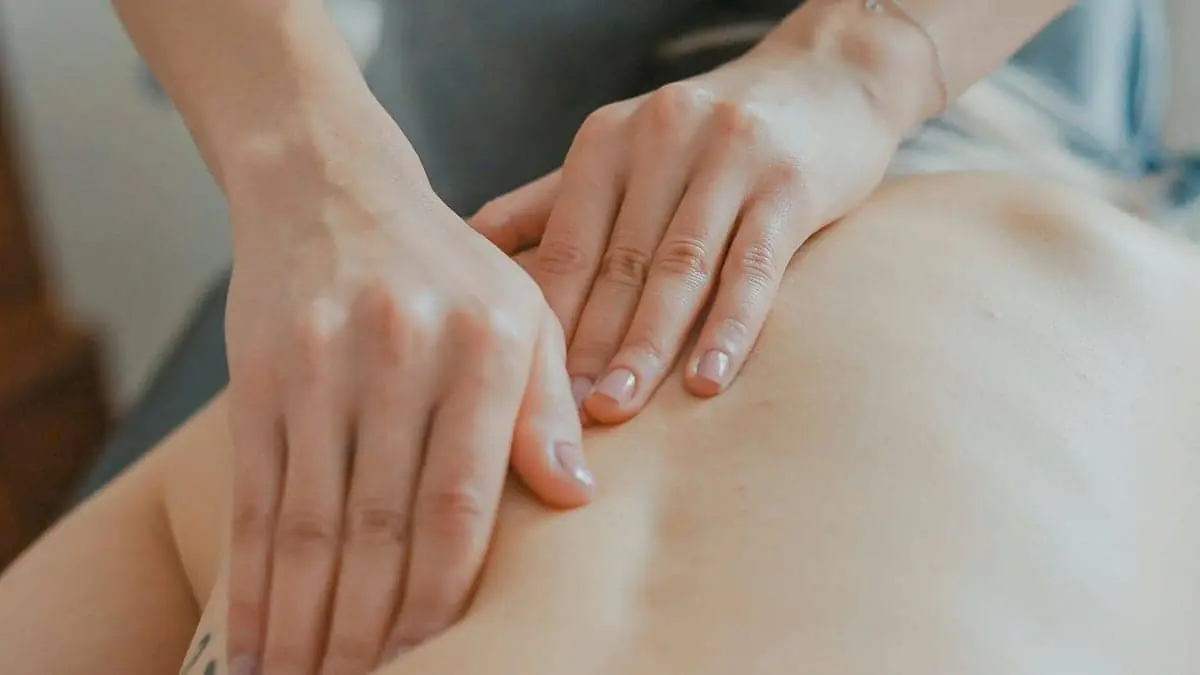
The treatment evidence is humbling. The 2003 review found that cryotherapy, stretching, ultrasound and electrical stimulation demonstrated little to no meaningful effect on DOMS symptoms, while massage showed inconsistent results depending on timing and technique. Light exercise reliably reduces pain, but only temporarily — movement works as a short-lived analgesic, not a cure.
The strongest recent evidence comes from a 2018 meta-analysis by Dupuy and colleagues in Frontiers in Physiology, which pooled 99 studies of recovery modalities. Massage ranked as the most effective technique for reducing perceived fatigue and soreness, with cold-water immersion a close second; stretching was among the least effective. Even the winners produced modest effects. Nothing in the literature restores performance the next day to baseline.
The recovery reviews do not justify routine self-medication as a way to improve training adaptation. Effects of anti-inflammatory drugs depend on dose, population and context, so it is too strong to claim every use undermines adaptation. Questions about medication belong with a clinician or pharmacist, especially with other conditions or medicines involved.
The most powerful intervention is not a therapy at all. After a first exposure to unfamiliar eccentric work, a second identical session produces dramatically less soreness and muscle damage — an adaptation researchers call the repeated-bout effect. It develops quickly, persists for weeks, and explains why the first ski trip of the year cripples you while the third barely registers.
Coaches exploit this deliberately: introducing new movements at low volume, then building over one to two weeks, blunt the worst of DOMS without sacrificing adaptation. Progression, not recovery gadgets, is the real prevention strategy.
The effect's durability is its quiet advantage. It does not require continual novelty-chasing or heroic doses to preserve: a maintenance exposure to the movement every few weeks keeps the protection alive, which is why programs that rotate exercises gradually — one new movement at a time, at conservative volume — produce lifters who rarely complain of soreness yet keep adapting. That design principle, not a supplement stack or a gadget, is what the soreness literature most consistently supports.
Compare a sore session with the preceding routine. Was the movement new, the lowering phase longer, or the total work unusually high? That review can inform a more gradual introduction next time without claiming the painful session produced extra growth. A recovery method that reduces perceived soreness may still leave strength or coordination below normal, so comfortable movement is not automatic clearance for maximal work. Record function as well as discomfort. Severe or unusual symptoms, substantial weakness or persistent problems should not be dismissed as the expected price of training. The purpose of the review is a better next exposure, not a higher tolerance for warning signs.
Two cautions matter. First, soreness is a poor proxy for a productive workout. You can build muscle and strength without ever being sore, and unaccustomed novelty — not growth stimulus — drives much of the sensation. Chasing soreness is chasing the wrong variable. Second, DOMS should be distinguished from injury: sharp localized pain, swelling, or weakness lasting beyond a week suggests a strain rather than routine soreness and deserves proper assessment.
Delayed-onset soreness is not a verdict on your training or a badge to collect. It is the ordinary signature of a muscle meeting a new demand, and the body's answer — the repeated-bout effect — is faster and more reliable than anything on sale.
The WHO recommends 150-300 minutes of moderate activity weekly plus two days of strength training. What the guidelines actually say and how to meet them.
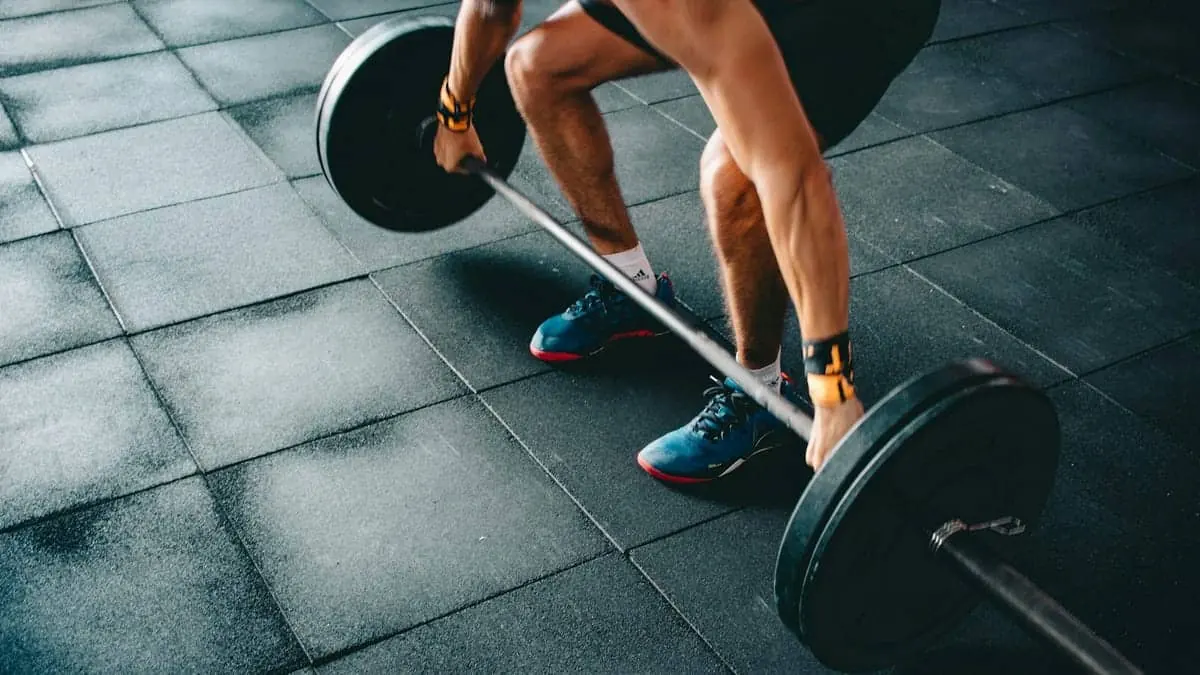
Use the two-day strength guideline to plan muscle-group coverage and repeatable sessions, without treating mortality curves as a precise training dose.
Cohort studies tracking thousands of adults found mortality benefits around 7,000-8,000 daily steps, not 10,000. What the numbers actually show.