Garmin Forerunner 165 Buying Guide: Features and Trade-Offs
Garmin Forerunner 165 costs $249.99 at launch with a 1.2-inch AMOLED display, GPS and wrist heart rate. What you get, what you give up, and who it suits.
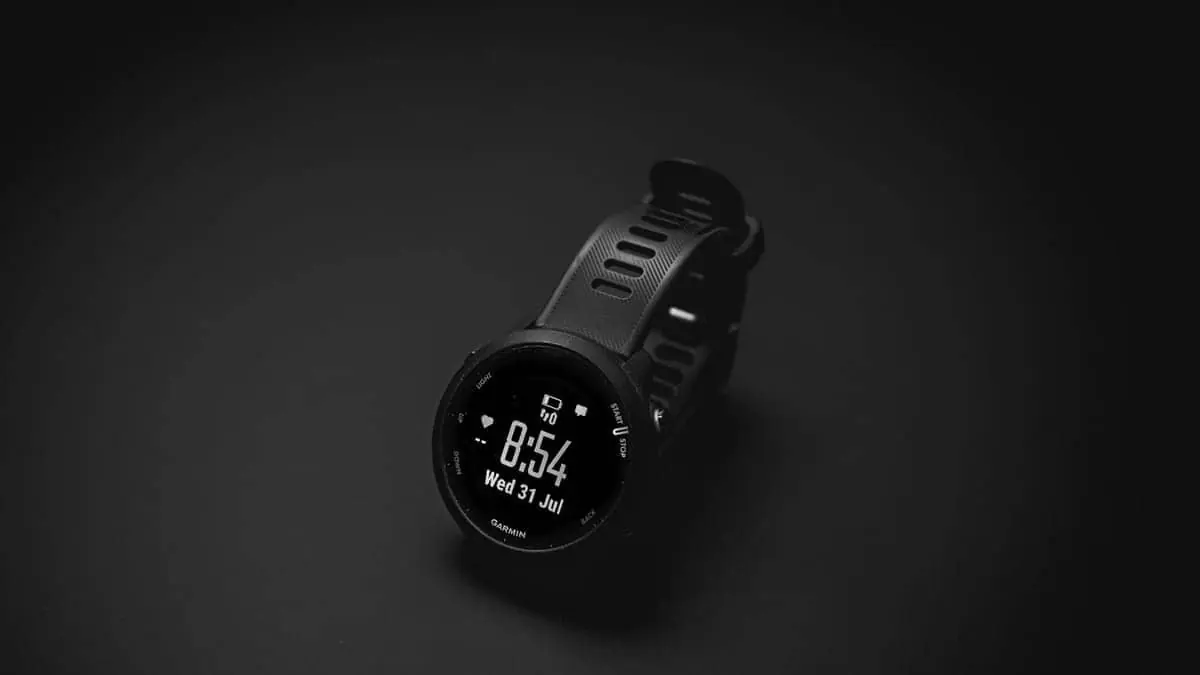
Chest straps agree with ECG nearly perfectly, while wrist optical monitors vary from excellent to poor depending on activity, Cleveland Clinic research shows.
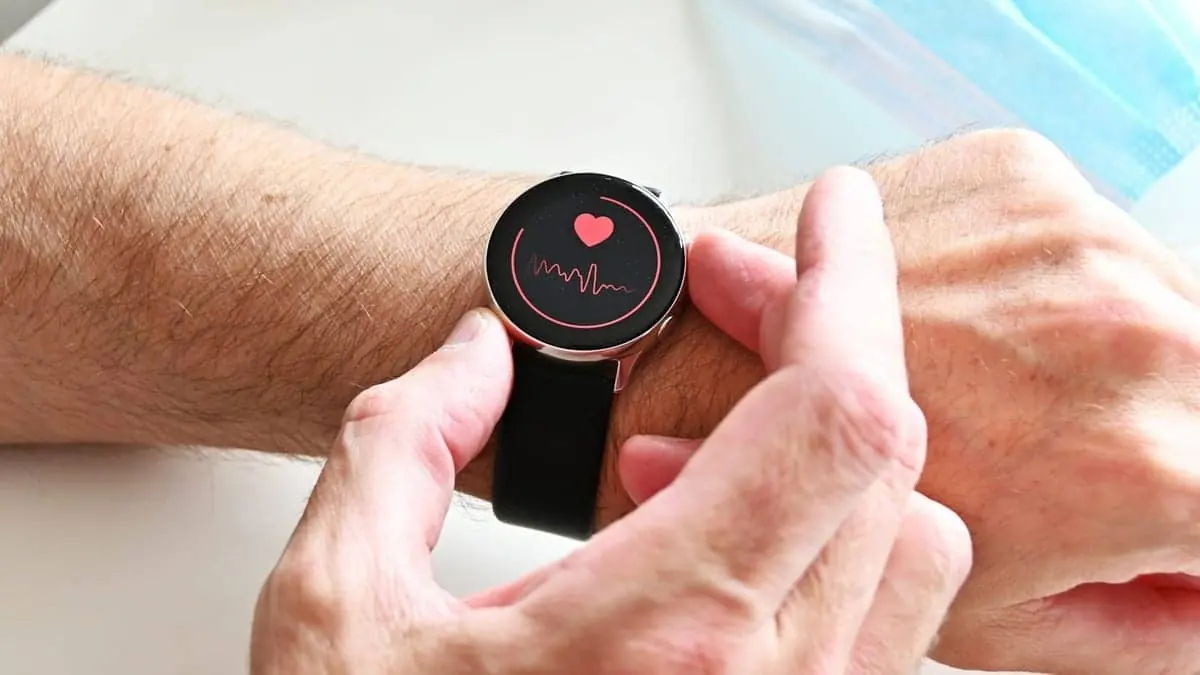
A heart-rate sensor is only as useful as the measurement needed from it. A broad trend during a steady session and a rapid response during intervals place different demands on the device. The comparisons below tested chest and optical sensors against a reference, showing that accuracy depends on movement and the model being tested. This article uses that activity-specific evidence to choose a tool, without treating an older device study as a verdict on every modern watch or a chest strap as incapable of error.
If a reading jumps while effort is stable, note when it happened and check fit, contact and battery condition according to the device instructions. A repeated problem during a particular movement is more informative than a single implausible peak. Compare the time series, not only the session average, when a second suitable reference is available. That can reveal delayed responses that disappear inside an average. These checks do not make a consumer device diagnostic equipment. Symptoms should not be dismissed because the display looks normal, and an unusual number without symptoms still needs interpretation rather than automatic acceptance.
The technologies are fundamentally different. A chest strap reads the electrical signal of each heartbeat through conductive electrodes pressed against the skin — the same principle a hospital ECG uses, measuring your heart directly. A wrist device uses photoplethysmography, or PPG: green LEDs shine light into the skin, and a sensor reads how the reflected light pulses with blood flow. It is measuring your pulse — a mechanical consequence of the heartbeat — at a site full of flexing tendons, sweat, and motion.
That difference explains almost everything the research has found.
The most cited comparison comes from a 2017 Cleveland Clinic study in Medicine and Science in Sports and Exercise. Fifty healthy volunteers wore a Polar H7 chest strap, a forearm optical sensor, and two wrist devices while exercising on a treadmill, stationary bike, and elliptical, with everything compared against a reference ECG. Agreement was scored with Lin's concordance correlation coefficient, where 1.00 is perfect.
The chest strap scored 0.996 — essentially perfect. The best wrist device, the Apple Watch, scored 0.92; the rest ranged from 0.83 down to 0.67. The activity-specific results were just as telling. On the treadmill, nearly everything worked well, with scores from 0.88 to 0.93. On the elliptical with moving arm levers, no wrist device was accurate — every score fell below 0.80 — and the researchers' conclusion was blunt: electrode-containing chest monitors should be used when accurate heart rate measurement is imperative.
Skeptics note that 2017 hardware is ancient by wearable standards. A 2019 follow-up from the same group tested four newer watches in 50 trained athletes running at six speeds up to nine miles per hour. The Polar H7 chest strap again led at 0.98, the Apple Watch Series 3 came close at 0.96, and the other three watches — from Fitbit, Garmin, and TomTom — tied at 0.89. Newer sensors improve steadily, but the strap still wins and the watches still scatter.
Cardiac patients tell the story more starkly. In an 80-person cardiac rehabilitation study, the chest strap matched ECG at 0.99 while four wrist devices ranged from 0.80 down to 0.52 — one Garmin barely agreed with the ECG at all. When accuracy is a safety matter, the gap is not academic.
PPG fails in predictable ways. Motion is the biggest: arm swing, grip changes, and wrist flexion distort the blood-flow signal, and during running a sensor can latch onto your foot cadence and report it as heart rate — the classic cadence lock, recognizable as suspiciously smooth readings that track your steps. Fit matters too: a loose band lets outside light leak in, while a too-tight band compresses the very vessels being read. Tattoos and darker skin tones absorb the light the sensor depends on, and cold weather constricts blood flow to the hands, starving the sensor of signal. A chest strap avoids optical sensing limitations but can still produce errors through poor contact, movement, battery problems or fit.
Fairness demands the other side. During steady running or cycling with a snug fit, modern wrist sensors are often within a few beats per minute, and a 2017 Stanford study of a diverse cohort found median heart rate errors as low as about two percent on a stationary cycle and roughly five to six percent while walking. For casual athletes tracking general trends, that is usually fine. The problem is not that wrist readings are always wrong; it is that the errors are inconsistent — worst exactly when your data matters most, during hard intervals, heavy arm use, or cold-weather starts.
A newer option splits the difference. Arm band sensors, such as the Polar Verity Sense, move the optical sensor away from the flexing wrist onto the forearm or upper arm. A 2025 validation study compared one against a Polar H10 chest strap across nine activities: worn on the upper arm it averaged just 1.43 beats per minute of error, while the same maker's wrist-worn watch averaged 6.41 beats per minute with more variability. Placement, it turns out, can matter as much as the sensor itself.
If heart rate guides your training — zone work, intervals, threshold runs, or a clinical condition — buy a chest strap. Around 90 dollars for the Polar H10, the widely used reference standard, it pairs with nearly every watch and app. If you mostly want a general sense of effort during steady exercise, a modern wrist sensor is convenient and accurate enough. If you hate straps but hate inaccurate intervals more, an arm band is the compromise the data supports.
The ranking depends on the devices and activities tested. The cited studies favor the tested chest strap when precise exercise heart rate is needed, but do not establish an invariant ordering of every arm sensor and watch. Your watch is a remarkably capable computer with a heart rate estimator attached. A chest strap also needs correct fit, adequate electrode contact and interpretation of implausible readings.
Garmin Forerunner 165 costs $249.99 at launch with a 1.2-inch AMOLED display, GPS and wrist heart rate. What you get, what you give up, and who it suits.
Check the legacy BowFlex 552 and 1090 recall before use or a used purchase. Understand model identity, the official remedy and the limits of a desk review.
A practical framework for reading running-shoe reviews, comparing fit and checking model details. No claim of original lab or wear testing.