Chest Strap vs. Wrist: Which Heart Rate Monitor Is More Accurate?
Chest straps agree with ECG nearly perfectly, while wrist optical monitors vary from excellent to poor depending on activity, Cleveland Clinic research shows.
A 2019 meta-analysis of eight trials found elastic bands produced strength gains similar to conventional weights, with caveats on load ceilings and eccentrics.
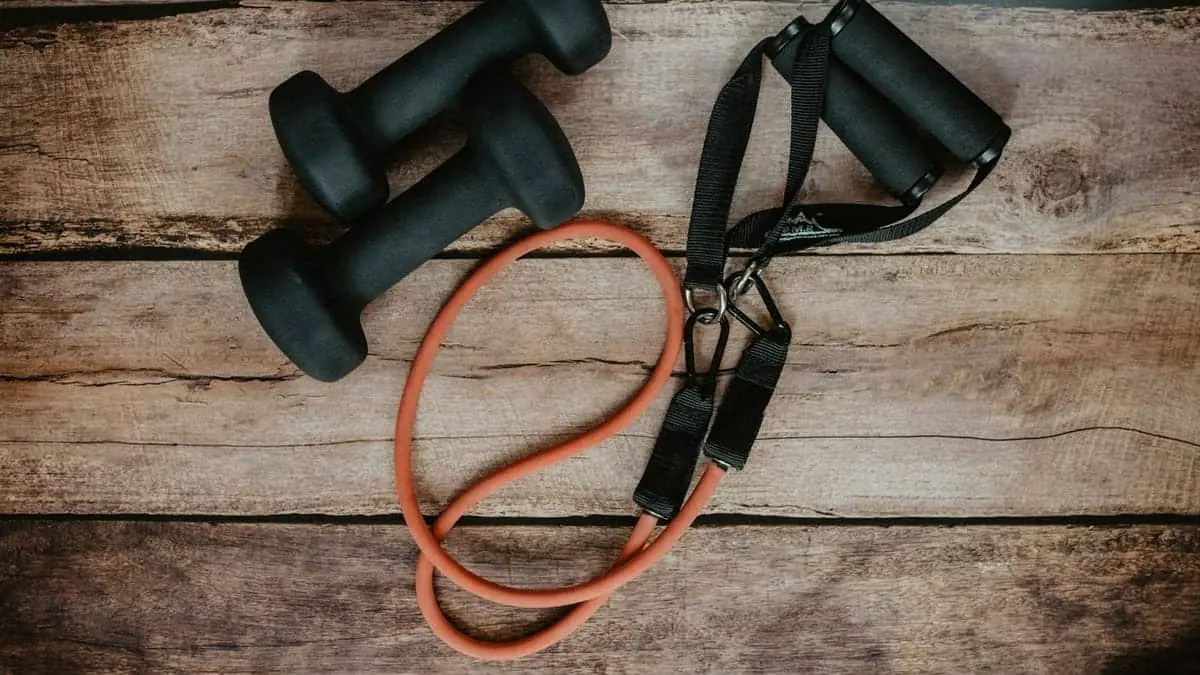
Bands and dumbbells can both load a muscle, but matching their training stimulus requires more than choosing equipment that feels heavy. The Lopes review compared strength outcomes across elastic and conventional training, while a separate trial matched a band-assisted push-up with bench pressing. These comparisons support taking bands seriously without proving universal equivalence for every movement, goal or training level. This article concentrates on matching effort and recording progression, rather than the storage and purchasing questions in the home-gym guide.
For an editorial logging example, note the band, anchor height, starting stretch, body position and movement range. The same band can create a different task when any of those changes. Keep a photograph or a brief setup description if that makes repetition easier, without treating it as a force calibration. Progress can then be judged within a consistent setup instead of comparing two brands' colors. Inspect equipment and anchors using their instructions. Similar average gains in a small literature do not establish equal long-term potential or make an improvised attachment secure.
The corrected abstract reports upper-limb SMD 0.09 with a 95 percent confidence interval from -0.18 to 0.35, and lower-limb SMD -0.11 from -0.40 to 0.19. Neither comparison established superiority. These estimates are not an equivalence test proving identical effects, and the paper has a 2020 corrigendum that should be read with the original report.
The authors' conclusion was direct: elastic resistance training is able to promote similar strength gains to conventional resistance training. For untrained and moderately trained people, the tool matters less than the effort, the consistency, and whether the load is progressively matched to your capacity.
The most cited supporting study comes from Calatayud and colleagues, published in the Journal of Strength and Conditioning Research in 2015. Thirty experienced lifters performed either a six-repetition-maximum bench press or a push-up loaded with an elastic band to match the effort. Electromyography showed no significant difference in muscle activation between the two exercises.
Then came the training test: five weeks of training with each method. Both groups improved their one-rep-max and six-rep-max bench press by statistically similar margins — double-digit percentage gains — while an inactive control group stayed flat. When effort and intensity are genuinely matched, the muscle responds to tension, not to whether the tension comes from iron or latex.
The limits are real and worth naming. First, the load ceiling: bands cannot practically reproduce very heavy compound loading, and no included study shows bands matching barbell squats or deadlifts at maximal loads. Most research supports bands for beginners through intermediate trainees, not for powerlifters chasing one-rep-max strength.
Second, mechanics differ. A band's resistance rises as it stretches, so tension is lightest where the muscle is longest and heaviest near lockout — the reverse of some free-weight strength curves. Eccentric loading is also reduced, since the band pulls back toward slack, and eccentrics are a meaningful driver of hypertrophy. Third, progression is harder to quantify: adding a thicker band is a coarser jump than adding a 5-pound plate.
The meta-analysis itself carried caveats: the underlying trials were few, short, and varied in population and protocol, so equivalence of strength gains should not be stretched into equivalence of every outcome, including muscle growth over the long term.
Cost is the obvious one: a multi-band set typically runs $20 to $40, versus hundreds of dollars for a comparable dumbbell range, and portability makes consistency easier for travelers. Electromyography work at matched loads also shows bands recruiting stabilizing muscles more aggressively in some movements, which several researchers view as useful for shoulder health and rehabilitation — physical therapists have prescribed elastic resistance for decades for exactly this reason.
Bands also pair well with weights: banded warm-ups, added accommodating resistance on barbell lifts, and lateral or rotational work that dumbbells handle awkwardly.
Age matters in the evidence, and it favors bands more than most lifters realize. Several trials in the meta-analysis included older adults, a population for whom free-weight training often carries intimidation and access barriers, and elastic programs reliably improved strength in those groups. For older adults, bands combine low injury risk with enough load to stimulate the muscle that protects bone density and independence. Hospital and physiotherapy settings have quietly standardized on elastic resistance for the same reason: it adjusts in tiny steps, travels easily, and cannot be dropped on a foot. For a general-fitness household that includes parents or grandparents, that clinical track record is a genuine selection argument rather than a footnote.
Band quality also varies more than most buyers expect. Cheap bands tear at the anchor or snap under overstretch, so inspecting for wear and replacing tired bands is part of owning them; the well-reviewed sets use layered latex and reinforced handles that hold up for years of normal training. Keep them out of direct sunlight, which degrades latex faster than use does.
The trials that produced equivalent gains shared programming habits worth copying. Sessions ran two to four times per week, each major movement pattern got direct work — a press, a row, a squat or hinge, a pull-apart or face pull — and, crucially, the resistance progressed. With bands, progression means shortening the band, stepping farther from the anchor, combining two bands, or moving from two arms to one: coarser jumps than a plate, but real ones. Logging which band and stance you used turns those jumps into a system instead of a guess. Rep ranges in the studies generally landed in conventional strength territory, roughly eight to fifteen repetitions taken close to fatigue, rather than the high-rep burnout style bands are often sold with. A realistic band-only week looks much like a beginner dumbbell plan with the handles swapped — which is precisely what the pooled results predict: matched effort, matched outcome, up to the ceiling.
If your goal is general strength and you will train progressively and consistently, the studies say bands are a legitimate primary tool, not a consolation prize. If your goal is maximal strength or long-term hypertrophy as an advanced lifter, free weights remain the better chassis, and the research never claimed otherwise. The honest summary: matched effort produces matched results — up to the point where the load ceiling arrives.
Chest straps agree with ECG nearly perfectly, while wrist optical monitors vary from excellent to poor depending on activity, Cleveland Clinic research shows.
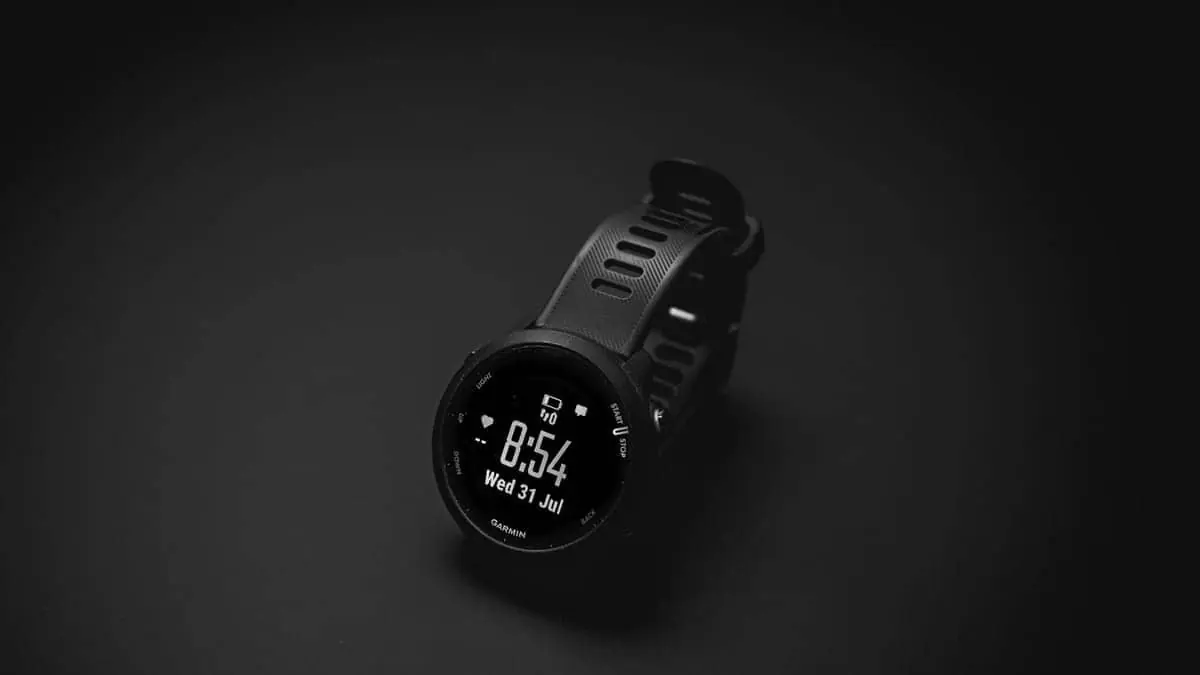
Garmin Forerunner 165 costs $249.99 at launch with a 1.2-inch AMOLED display, GPS and wrist heart rate. What you get, what you give up, and who it suits.
Check the legacy BowFlex 552 and 1090 recall before use or a used purchase. Understand model identity, the official remedy and the limits of a desk review.